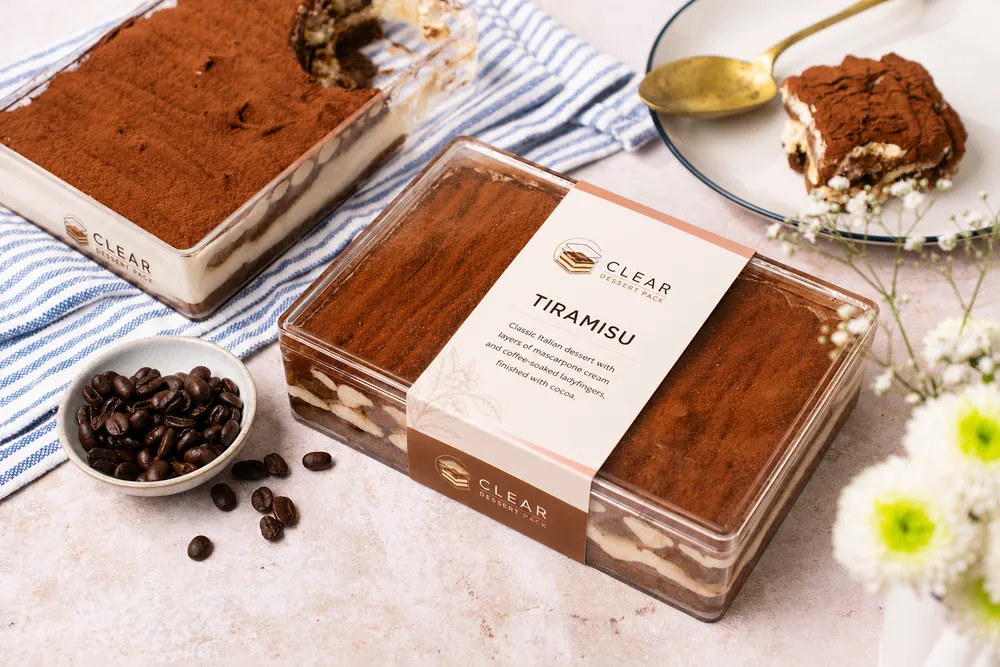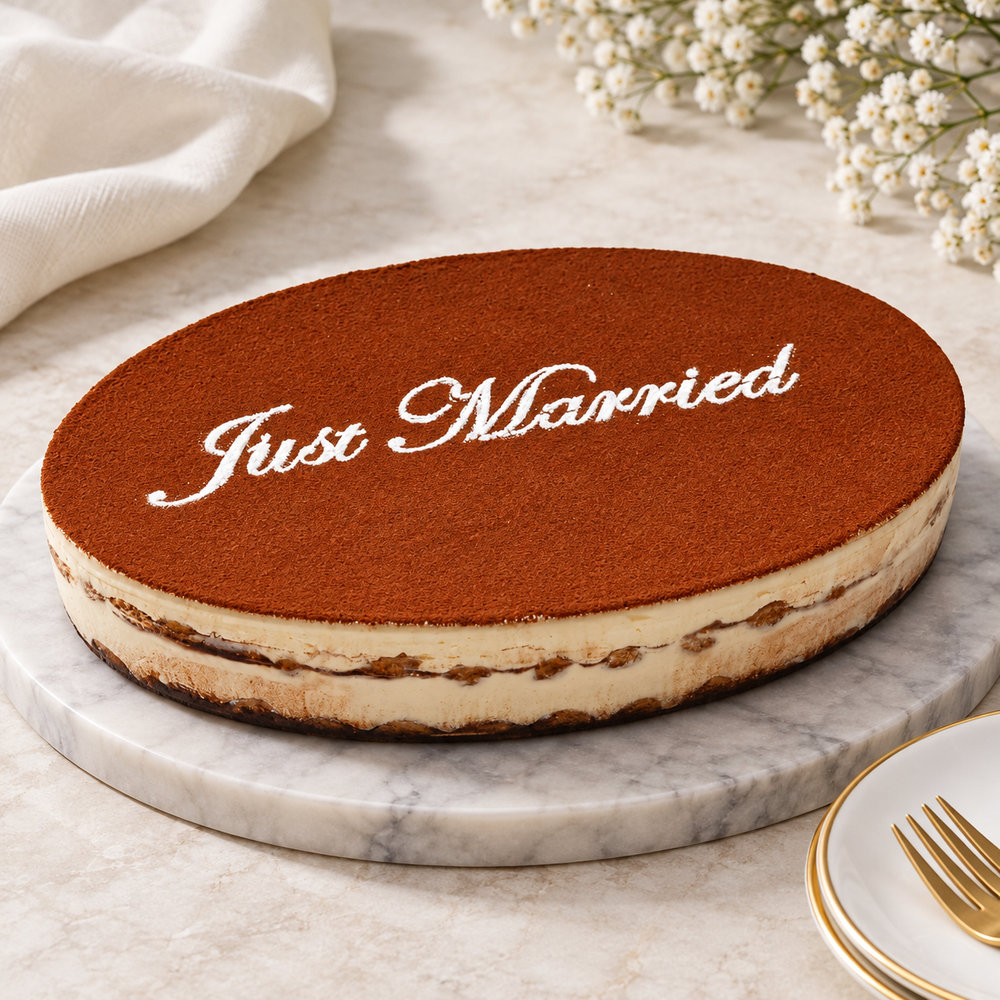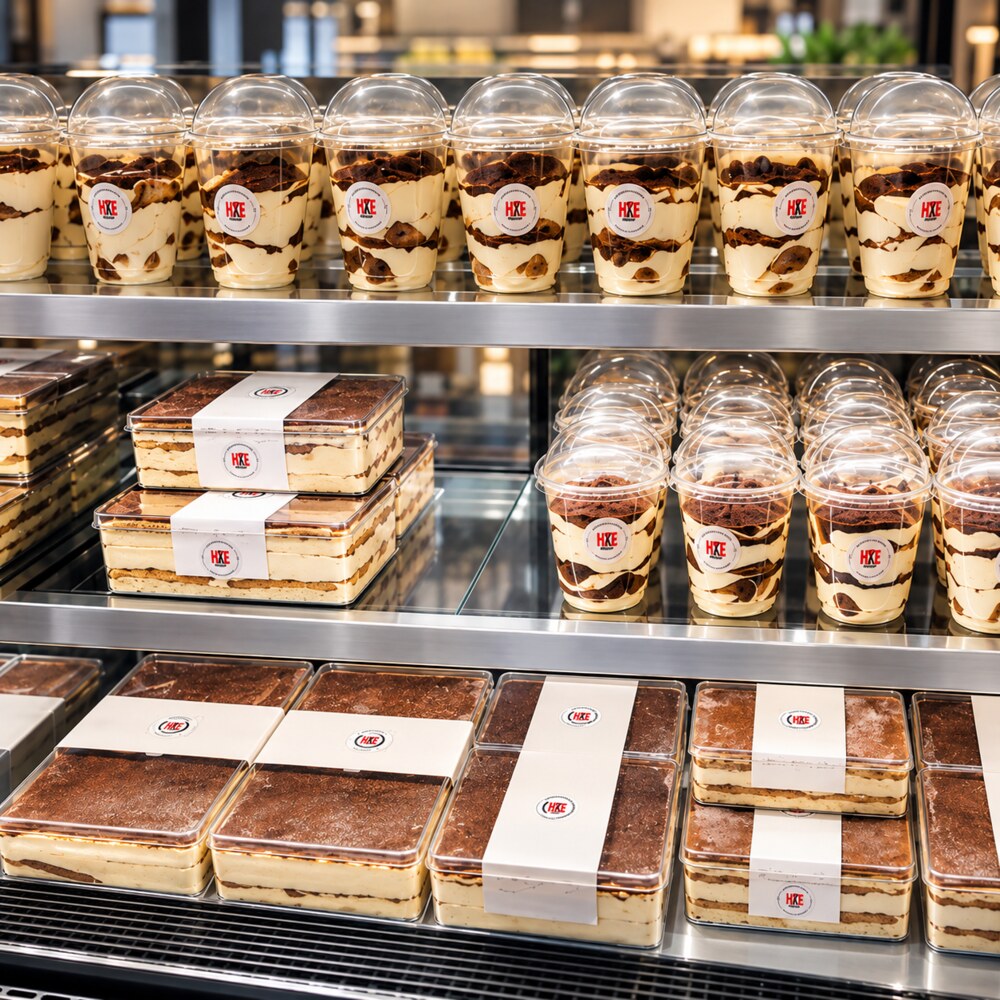
For wholesale tiramisu containers with lids, compare the finished box, matching lid and intended handling conditions before choosing a material. Clear Dessert Pack lists both PS and PET formats. Neither material name alone establishes a temperature limit, leak resistance or stacking capacity.
Start with your dessert dimensions, filled weight, display method, order quantity and destination. Use this guide to build a sample shortlist, then compare wholesale models and carton quantities.
1. PS vs. PET: compare finished containers
Both materials appear in our clear-container catalogue. Product geometry, wall thickness, forming process and lid design affect performance, so compare equivalent formats under the same conditions.
| Buyer check | PS formats | PET formats |
|---|---|---|
| Catalogue example | HK-28188, listed at 4000 ml | E1300, listed at 1300 ml |
| Appearance | Inspect the actual box for clarity, scratches and finish. | Inspect the actual box for clarity, scratches and finish. |
| Support and handling | Evaluate the filled sample, base and corners. | Evaluate the filled sample, base and corners. |
| Lid closure | Confirm the matching lid and check full rim engagement. | Confirm the matching lid and check full rim engagement. |
| Cold storage | Request the exact model’s documented use conditions. | Request the exact model’s documented use conditions. |
| Food-contact documentation | Match documents to the finished item and destination. | Match documents to the finished item and destination. |
The examples differ in capacity and structure; they are selection references, not a controlled comparison of resin performance.
What does “acrylic tiramisu container” mean in our range?
For our clear dessert-box range, customers use this name for PS containers. Check the material shown for the selected SKU: our PS models are specified as polystyrene. Share the box size or a reference photo so we can identify the corresponding model and lid.
View wholesale PS tiramisu boxes.


2. Cold storage, transport and visibility
Record the intended filling, storage, display and transport conditions in the purchasing brief. For a frozen-dessert project, request confirmation for both the body and lid; do not infer approval from a PET label or a refrigerated product description.
Check the complete pack
Review closure, deformation, corner damage and presentation with your actual dessert. Include the intended carton, carrying method and stacking arrangement in the evaluation.
Check display visibility
Observe condensation in your display conditions. Any anti-fog option needs separate confirmation and sample evaluation. Clear plastic alone is not evidence of an anti-fog treatment.
Packaging selection does not set food-storage times or extend shelf life. Use your validated food-handling procedure rather than changing filling or cooling practices solely to reduce fogging.
3. Match capacity to usable dimensions
External dimensions help plan shelves and cartons. Internal usable dimensions and the assembled lid determine whether your dessert fits. Nominal capacity is not a finished-dessert weight or a promised number of servings.
| Model | Listed capacity | Catalogue size | Material |
|---|---|---|---|
| HK-28188 | 4000 ml | 28 × 18 × 8 cm | PS |
| HK-21157 | 1800 ml | 21 × 15 × 7 cm | PS |
| E1300 | 1300 ml | 18 × 13 × 6.4 cm | PET |
These figures reproduce our current catalogue; confirm the specification and usable space for the order. See the complete size chart. Measure the finished dessert and topping height, check lid clearance, and support large filled trays from underneath during evaluation.
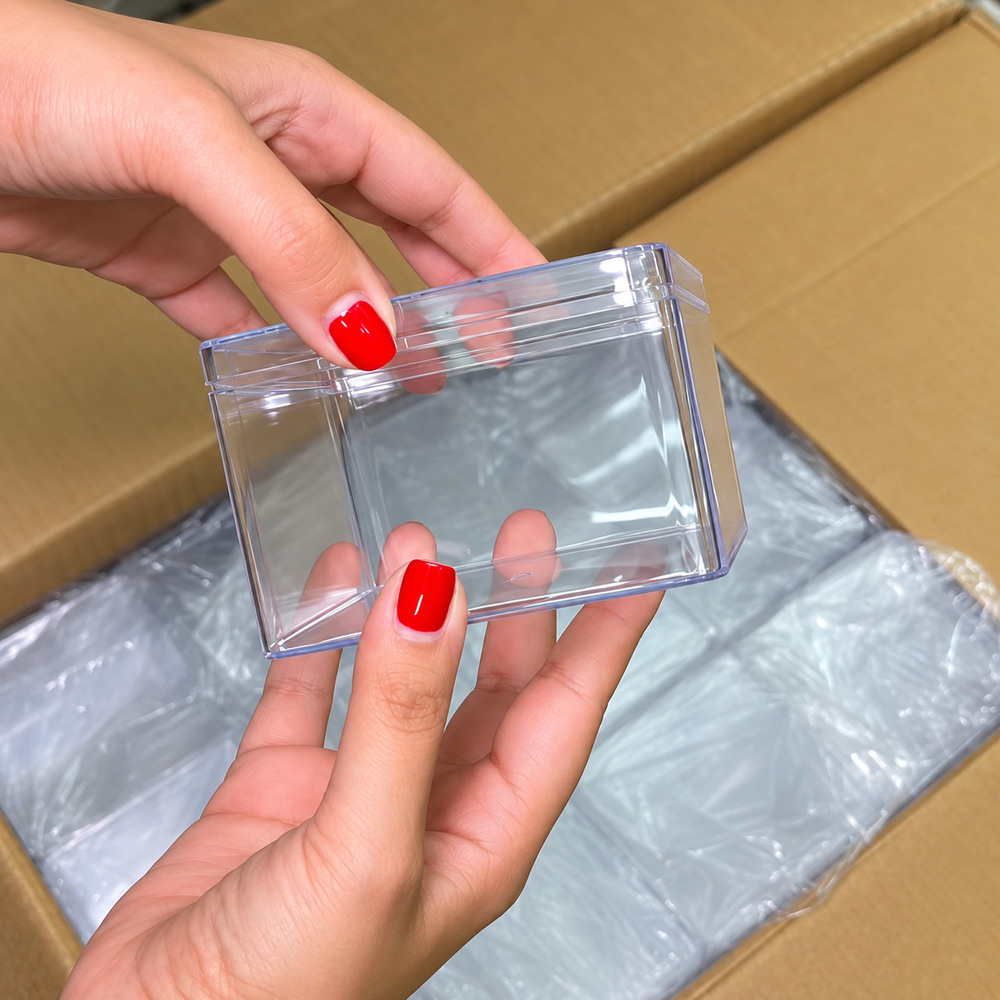
How to choose the right tiramisu box size
Start with the dessert you sell. Measure its length, width and height with the topping in place. Leave space above the cream so the lid does not touch it. A volume in ml is a useful guide, but it does not show how your slice will fit. Check the usable space inside the box as well as the outside size.
For a single portion, compare the small boxes in the range above. For a shared dessert, look at the larger trays. Fill a sample to your normal serving level. Check that a spoon can reach the corners and that the dessert is easy to serve. Keep a note of the model you tested so a repeat order uses the same pack.
For two boxes with the same footprint, compare the assembled height. SSM-002 lists 11.8 × 6 × 5.1 cm, while SSM-012 lists 11.8 × 6 × 7 cm. Confirm usable internal space and test both if toppings need more room.
Once you have a shortlist, follow the filled-sample and delivery checks before approving a bulk order.
Single portions or a sharing box?
Start with how the dessert will be served. For individual sales, compare the finished portion, topping height and space for handling. For a sharing dessert, also plan cutting, serving access and support for the filled box. Neither the model capacity nor its catalogue dimensions establish a serving count.
For smaller-format selection, compare SSM-002 (240 ml) with SSM-004 (450 ml). For larger formats, Clear Dessert Pack lists HK-21157 at 1800 ml and HK-28188 at 4000 ml. These are catalogue references, not fit guarantees. Check each model in the size chart, confirm its usable internal dimensions and matching lid, then test your finished dessert. Keep the approved model and sample reference with the bulk-order brief.
4. Wholesale sourcing checklist
- Specify the complete set: record body and lid references, quantities and whether the price is per component or assembled set.
- Review documents: match the material, food-contact conditions and destination to the relevant declaration or test report. A general resin description is not a product-specific approval.
- Confirm packing: request body/lid case counts, outer-carton dimensions and gross weight before comparing freight.
- Approve representative samples: agree practical handling and transport checks for your intended use. Record the approved sample and acceptance criteria.
- Confirm commercial terms: MOQ, mixed-model quantities, sample arrangements, production timing and delivery terms depend on the chosen items and order.
Recycled material requires its own evidence review. The FDA guidance on recycled plastics in food packaging addresses evaluation of recycling processes for food-contact applications; it is not certification of our products. For environmental purchasing criteria, read our bulk dessert-container sustainability guide.
5. Questions before sample approval
How can I compare single-portion and large-format tiramisu packaging for a dessert business?
Compare how the dessert is sold and served, its finished dimensions, topping height, filled weight and handling method. Individual packs need a fit check for each finished portion; sharing boxes also need a plan for cutting, serving access and support. Confirm the internal space and matching lid, then evaluate samples. Catalogue capacity does not establish the number of servings.
What are the best materials for a tiramisu container with a lid?
Choose a finished container that fits the dessert, handling conditions and destination requirements. Clear Dessert Pack lists PS and PET formats; compare actual samples for visibility, lid engagement, support and packing efficiency. A resin name alone does not establish freezer suitability, leak resistance or load capacity.
Is this container suitable for refrigerated or frozen desserts?
Confirm the temperature range and intended use for the exact box and lid before ordering. Refrigerated use does not establish frozen-use suitability. If your process includes freezing, ask for model-specific evidence and evaluate samples through your actual handling cycle before approval.
How should I check lid fit and stacking before ordering?
Fill a sample with the intended dessert and close every part of the lid. Check for interference, movement, corner damage and deformation under the planned stacking and transport conditions. Agree acceptance criteria with the supplier; do not treat a generic drop height or stacking count as a tested product rating.
How much clearance should I leave for toppings?
Measure the highest finished topping and the usable internal height with the lid closed. Allow clearance for your decoration and expected handling movement, then verify the assembled sample. External box dimensions and nominal volume do not define usable topping space.
How do I properly store tiramisu in a container with a lid?
Use the box and lid within their confirmed conditions and follow the food business’s validated storage and handling procedure. Packaging does not establish the dessert’s safe shelf life. Keep the rim clear for closure, avoid pressure on toppings and check condensation in the actual display environment.